The roots of NamaAmrita
Our Tradition
A brief introduction to the Gaudiya Vaishnava tradition, Sri Gaura-Nitai and the disciplic succession through which devotional teachings are received.

1. Gaudiya Vaishnava Tradition
Gaudiya Vaishnavism is a Vaishnava tradition associated especially with Sri Chaitanya Mahaprabhu, who appeared in Bengal and taught devotion to Krishna, congregational chanting of the Holy Name, and loving service to the Lord. The word “Gaudiya” refers to the Gauda region; “Vaishnava” refers to a devotee of Vishnu or Krishna.
In the presentation given by Srila Prabhupada, the Gaudiya Vaishnava line is described as connected with the Madhva sampradaya and as receiving spiritual knowledge through an authorised disciplic succession. Its central practices include hearing about Krishna, chanting His names, remembering Him and serving Him with devotion.
NamaAmrita presents the Holy Name as a central devotional practice within this tradition. Readers are encouraged to study the original scriptures and the explanations of recognised acharyas rather than rely only on summaries.
Read more: Śrī Caitanya-caritāmṛta, Ādi-līlā 1.19 · Śrīmad-Bhāgavatam 5.25.8
2. Sri Gaura-Nitai
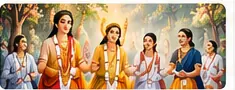
“Gaura-Nitai” is an affectionate name for Sri Chaitanya Mahaprabhu (Gaura) and Sri Nityananda Prabhu (Nitai). In the Gaudiya Vaishnava understanding, Sri Chaitanya Mahaprabhu taught the chanting of Krishna’s names and the path of devotion, while Sri Nityananda Prabhu is especially celebrated for extending mercy and encouraging people to take up Krishna consciousness.
Their example encourages devotees to chant without pride, share spiritual teachings respectfully, and approach others with compassion. Gaura-Nitai worship is not a substitute for attentive chanting or ethical conduct; it is an invitation to deepen one’s devotion and service.
Read more: Śrī Caitanya-caritāmṛta, Madhya-līlā 16.65 · Srila Prabhupada-lilamrita, Chapter 65
3. Guru-parampara — disciplic succession
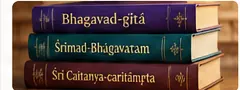
Guru-parampara means the succession of spiritual teachers and disciples through whom spiritual knowledge is received and passed on. Bhagavad-gita 4.2 describes knowledge as received through parampara. In this understanding, a teacher does not invent a new teaching independently but faithfully represents the teachings received from the previous acharyas.
The disciplic succession presented in Bhagavad-gita As It Is begins with Krishna, then Brahma, Narada, Vyasa and Madhva, followed by teachers including Madhavendra Puri, Isvara Puri and Sri Chaitanya Mahaprabhu. The succession continues through the Goswamis and later acharyas to Srila Bhaktisiddhanta Sarasvati Thakura and Srila A. C. Bhaktivedanta Swami Prabhupada. Please consult the source list for the full sequence and spelling of names.
For a learner, guru-parampara is a reminder to study with humility, compare explanations with authorised sources, and seek guidance from qualified devotees. A website introduction is only a starting point; it does not replace personal guidance from a bona fide spiritual teacher.
Read more: Bhagavad-gita As It Is — The Disciplic Succession · Bhagavad-gita 4.2
This introductory page is a concise summary based on the cited Vedabase editions of Srila Prabhupada’s books. Please use the linked source texts for fuller context and interpretation.